"Food ways" is an expression that dates back to 1946. It refers to the eating habits and culinary practices of a people, region, or historical period. This blog shares finds for foodies and food lovers - curated content from around the web, sharing the ways we all like to enjoy our food! Food history, recipe sharing, and all things food-related. This foodie blog is aimed at newbie cooks or beginners. But everyone is welcome! (https://eesfoodiejournal.blogspot.com/)
♦ Welcome! Glad You're Here! ✨ We’ve moved! [OLD HOME: eeschannel.] This is our new home at EESFoodieJournal
DISCLOSURE: These pages contain affiliate links. As an Amazon Associate and an affiliate for other vendors, I earn from qualifying purchases at no extra cost to you. Thank you for your support.
When it comes to being health and fitness conscious, making quality of life choices, and developing healthy living habits, citizens of Austin, Texas, set the example for everyone else to follow; including the Californians. { IMHO ☺}
Do you know which foods give you energy or what you can do to get more energy?
(No. Eating donuts and watching TV are not on the list.)
Sharing a recap of key facts to pique your interest and some information links on health, wellness, fitness, diet, nutrition, and exercise for further reading and research.
♦♦♦♦♦♦ According to Tori Jarzabkowski, Austin Fit Magazine, there are five foods that fuel the body or give you energy. (1) Matcha Tea (2) Bone Broth (3) Fermented Foods (4) Coconut Sugar (5) Seaweed Snacks
♦ REFERENCE: Jarzabkowski, Tori. "Nutrition Trends for 2015." Austin Fit Magazine: Best of 2014 Issue Jan. 2015: 22-23. Print. AFM Issue #207. Est. 1997. Official website: https://www.austinfitmagazine.com/
♦♦♦♦♦♦ Lynnis Woods-Mullins, CEO of Praiseworks, Inc. offers her advice on ways you can get more energy. (1) Water-hydration (2) Exercise (just a brisk walk) (3) Super foods (4) Detox green smoothies (5) Aromatherapy
I don't know about you but it would be very easy to get into the healthy habit of drinking green smoothies (or any smoothie for that matter) in the morning for breakfast and then enjoying a delightful cup of green tea in the afternoon or the evenings.
I love watching cooking shows on television. There is this one show where the host goes all over America and shines a spotlight on the various ethnic cuisines. I once lived in Houston, Texas and I wish I had know this but I did not. As most people do, whenever they move to a new place, they bring their customs and traditions with them. They especially bring their food. Because there nothing better than the taste of home when you are now living in a foreign land. It turns out that many Nigerians relocated from their country and there is a thriving community in Houston, Texas. There are some popular restaurants in Houston that serve Nigerian cuisine.
I love watching Korean drama and love to learn about the teas they drink. In one K-drama, there was a lady who worked at the Commoners' Clinic, and she offered a man a tea called Angelica keiskei. Did you know:
~ Angelica keiskei, commonly known under the Japanese name of ashitaba (アシタバ or 明日葉), literally "tomorrow's leaf", is a species of flowering plant in the carrot family. It is native to Japan ...” (Per Wikipedia); AND
~ Some strawberry growers have shifted to growing ashitaba (or Angelica keiskei) because they say it's a better money-maker and easier to cultivate.
Various healthcare websites offer information about this plant's medicinal value. Of course, this is yet another one of those plants that holds the "key to extended youth".
"... a plant called ashitaba is important in supporting a person’s health & well-being. ... researchers are suggesting that a compound in this plant boosts cellular health and may prolong youth." This Japanese plant could hold the key to extended youth ~ https://t.co/TZ0qOrDsSk
5 Exotic Spices: asafetida, dried avocado leaves, epazote, grains of paradise, and juniper berries. Do you know the country which introduced these marvelous cooking ingredients to the world? ~ https://t.co/Z4MjtPzEhFpic.twitter.com/H1O2Kgyh9O
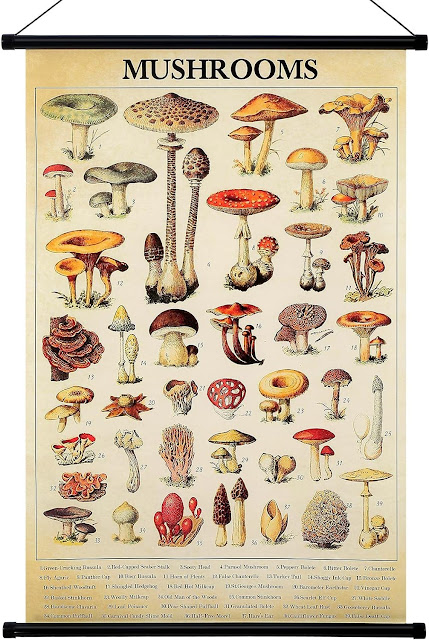
When one says the word “mushroom” it might provoke various thoughts. Psychedelic dreams. Fantasy and fairy tales. Tiny homes for whimsical creatures. A meat substitute for vegans and vegetarians. For me, it provokes a memory of a romantic dinner date. My first experience tasting a mushroom was when my late husband (my fiancé at the time) prepared dinner for me. Steak with mushroom gravy. Before meeting my husband, I avoided mushrooms for two reasons. ~Number 1: My mother never used them in any of her recipes. Mom didn’t cook them. (???) Maybe they don’t taste good. (O.o) ~Number 2: The way people describe mushrooms. Fungus. Toadstool. They don’t make the mushroom sound appetizing or visually appealing.
However, many cooks and chefs use the mushroom as the main ingredient in their recipes. Foodies are happy to share photos of amazing dishes where mushrooms are the star of the show. As for being visually appealing, mushrooms are quite beautiful. Artists often use them to illustrate fantasies. Nature photographers go insane! They capture incredible pics just roaming through the woods or the fields. My first time eating mushrooms was over 40 years. But from that day forward, I didn’t need convincing to make mushrooms a part of my diet. However, in case you do, perhaps this health article by Popular Science will persuade you. “4 reasons you should eat more mushrooms”.
It's good to know these reasons why, but the most important thing everybody needs to know about mushrooms is that some of them are NOT edible. No doubt you will find these information links useful. 10 of the World's Deadliest Mushrooms - WorldAtlas.com
If you have been following this foodie blog then you know that my love affair with mushrooms began the same time that I started dating my late husband, I shared those details in this blog post:
This short post (or food blurb) is just an add-on to tell you more things I have discovered about this wonderful fungi! Did you know that there is such a thing as a Mushroom of Immortality?
“Reishi/lingzhi has been referenced as far back as 100 B.C. as a supplement used to improve human health.” It is called a Mushroom of Immortality and you can grow it on your own. They're quite tasty. Just don't believe for one minute that they will make you live forever.
Here is a wonderful veggie soup will get you through the winter months. Totally comfort food! It includes a variety of mushrooms: cremini, shiitake, and reishi.
It’s really no big surprise that people like kawaii. It’s loaded with cuteness! 😊
When my high schooler was a middle schooler, she enjoyed this cartoon program called Phineas and Ferb about two young boys who are geniuses and always cook up some unbelievable event for each episode. The favorite line in the show is when someone usually asks them: “Aren’t you are little young to be doing this?” (“This” whatever the this is that they’re doing that kids should not be able to do.); and they always respond: “Yes. Yes we are!” :)
Well there was one episode where they were trying to overcome an “alien monster” and just didn’t know what “weapon” they could use. Finally Phineas figured it out and it wasn’t anything he and his friend could build themselves. However one of their friends did possess it. Their friend’s weapon was “cuteness”.
Are you
familiar with Kawaii Cooking?
Kawaii
is the Japanese word for “cute”.
I
describe this cooking style in 2 words: adorable cuteness!
It's a
Japanese way of preparing food that is aimed at making kids happy to
eat their food. It is edible art! Per Wikipedia: “Generally
delicate and tiny items are called "kawaii" in Japanese;
miniature food is created with the Japanese miniature-art techniques
of recent decades.”
Learn
more about the technique and try some recipes:
Raye gardens organically, harvests rainwater, strives to eat locally, and honors the gods from her home in the Pacific Northwest. Bento boxes are fast becoming popular as a modern Western lunchtime option. These small meals offer lots of variety and can be created from very healthy ingredients.
Pesto is not only one of the tastiest condiments you can make, but it is also versatile and healthy. Made with fresh and pure ingredients, it includes some of the best things nature has to offer. The ingredients are simple and basic; They include fresh basil leaves, fresh garlic, olive oil, fresh walnuts (not roasted) or pine nuts, salt, and pepper.
You can buy pesto in the supermarket, condiment stores or alternatively make it in a food processor, it will probably taste good, but our goal is excellence.
To produce really great pesto, you need to chop it by hand; when you put it in a food processor it becomes too doughy and too juicy. This is often the problem with commercial products, but when chopped by hand, you get the perfect consistency. The other reason to make it at home is that you can make sure you are using the highest quality ingredients. When choosing your ingredients, it is best to go to a farmers market or somewhere that has a particularly good turnover. There are many different varieties of basil leaves, lemon basil, clove basil, and cinnamon basil, to name just a few, sweet basil is primarily used for pesto, but ask your local grower for other varieties and see which one you prefer. The basil leaves should be a deep green color (avoid dark spots and yellowing). They are available all year round, but there is usually a big difference in size and flavor between the summer months, when it grows freely and abundantly, and in winter.
Fragrant and sweet, basil also has many health benefits, it has anticancer and antiviral properties, it is an excellent source of vitamin A, and a good source of magnesium, which promotes cardiovascular health. To prepare the basil, wash the plant and dry the leaves, once the leaves no longer drip remove the stems. It is best to cut the stems where there are no longer many leaves and then separate the leaves from the main branch. It’s fine to leave some of the smaller stalks behind, but putting the larger main stalks in the pesto is not recommended. Chop the leaves finely, for this recipe; It should have about 2 full cups of chopped basil. The next step is to take a handful of walnuts and chop them small, but not until they have a powdery consistency. After chopping, you should take half a cup of walnuts. The pesto will be better if you can taste the small pieces of nuts, they should not be larger than a grain of rice. As you prepare your pesto, take note of the healthy qualities of its ingredients. Walnuts are rich in vitamin E and an excellent source of healthy monounsaturated fats that are good for the heart. Some people use pine nuts; we’ve found walnuts to add a thicker, richer texture.
Drizzle with just enough virgin olive oil so it sticks like a paste. Extra virgin olive oil is one of the most beneficial oils for health on the market and has been shown to be highly protective against heart and chronic degenerative diseases. About two tablespoons of fresh garlic and salt and pepper should be added to taste. People are always surprised when they see how much garlic we put in, it not only adds wonderful flavor, but also has abundant health benefits. To name just a few, garlic has antibacterial, antiviral, and anticancer properties and the ability to lower blood pressure. We found that a large amount of fresh garlic not only increases flavor, but also helps us introduce healthy foods into our bodies. Some people like to add Parmesan cheese to their pesto, we think this adds unnecessary fat content and therefore reduces the overall nutritional benefits. Pesto is delicious as a spread on bread or crackers, added to salads, or eaten with grains, pizza, or with any vegetable stew or dish. Pesto is truly versatile, capable of enhancing almost any meal.
Original Source: Content prepared by Anne Louis for Food Ways.